Romain Finds His Mother Eating the Steak Drippings
Promise at DawnAt thirteen, Romain Gary discovers that his mother has been secretly eating the fat left from the steak she prepares for him. The revelation exposes the sacrifice beneath their fragile daily routine and turns his gratitude into shame, anger, and a lasting sense of helplessness. His mother finds him after he runs away, and her promise that he will soon be able to care for her gives the painful encounter a direction that shapes his understanding of their bond.
Setting and Material Circumstances
The episode belongs to the years when Romain Gary and his mother were living in Nice. Each morning they walked together along the Promenade des Anglais, discussing the future before he went to school and she went to work. At the Hotel Negresco, she rented a display case and filled its shelves with luxury goods borrowed from local shops. Her income depended on a ten-per-cent commission on each scarf, belt, clip, or sweater sold. She also charged customers more than the agreed price and kept the difference, a small additional margin in a business on which their survival depended.
His mother spent most of the day watching for possible customers and smoking Gauloises. A two-hour break at noon allowed her to go home for lunch with her son. The modest business had to cover bread, butter, rent, school fees, clothes, and shoes, as well as the steak she took pride in setting before him. The meal represented more than a particular food: in the narrator’s account, it stood for the daily effort by which she tried to keep hardship from defining her son’s life.
She had been fighting to support them alone, without a husband or lover and without friends, for more than ten years. She watched him eat with evident satisfaction, while maintaining that she herself could not eat the meat because she was on a diet and animal fats were forbidden to her. The child accepts this explanation until an ordinary interruption at the end of lunch makes the hidden arrangement visible.
The Discovery
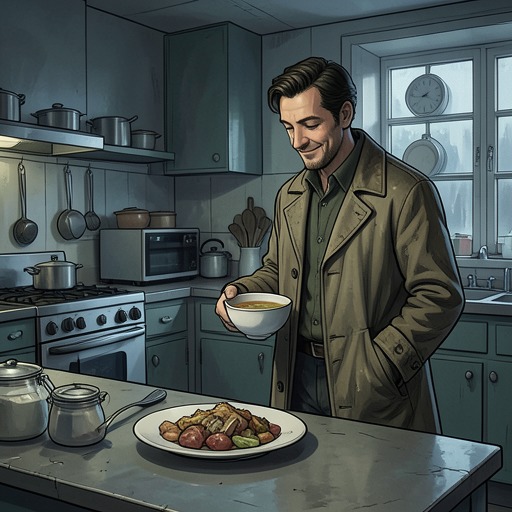
After leaving the table, Romain goes into the kitchen for a glass of water. He finds his mother sitting on a stool with the frying pan on her knees. She is using pieces of bread to gather up the fat in which his steak has cooked and eating them. When she notices him, she tries to hide the pan beneath a napkin, but he has already understood why she has been refusing the meat she prepared for him.
The discovery reverses the apparent meaning of the meal. What had looked like his mother’s dietary choice is revealed as a way of reserving the steak for him while quietly making use of what remained in the pan. The scene does not disclose a new hardship so much as expose the one already built into their routine: the food presented as evidence of her success had required her to go without the part she told him she could not eat. The pan and the bread make that sacrifice concrete, and the attempt to cover the pan cannot restore the explanation he had believed.
He remains still, looking at his mother and at her embarrassed expression, then bursts into tears and runs away. His reaction is not described as a dispute over food alone. He is overwhelmed by the knowledge of what she has been doing for him and by his inability, at thirteen, to change the conditions that made the gesture necessary. The discovery leaves the child confronted with an imbalance between what his mother gives and what he can give in return.
Flight and Reconciliation
Romain runs to the far end of the Avenue Shakespeare, where an embankment overlooks the railway line, and takes refuge in tall weeds beneath a mimosa tree. In the middle of his distress, he briefly thinks of throwing himself beneath a train as a way to escape his feelings of shame and helplessness. Almost at once, however, another response takes hold: a fierce determination to set the world right. He describes that determination as something that remained with him as he grew older, though the immediate scene offers no practical means of acting on it.
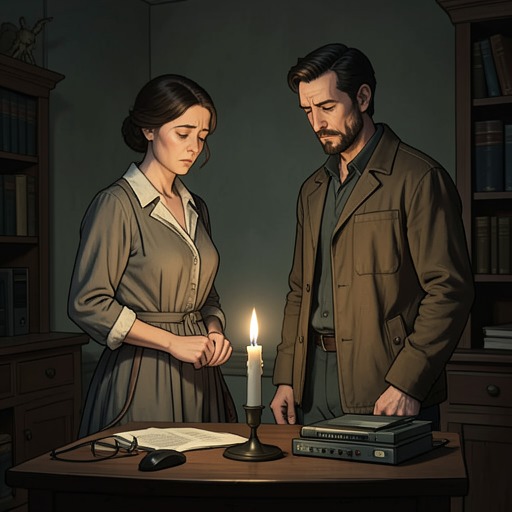
His mother finds him there, although he says he does not know how she discovered where he had gone. She sits beside him with a lit cigarette and a packet of Gauloises Bleues. She tells him that she is sorry for hurting him and will not do it again; he repeatedly asks to be left alone. The exchange registers both the strength of his hurt and the fact that she has come after him rather than leaving him by himself. A train passes below them. For the boy, its noise seems to merge with his grief, joining the railway setting to the emotional crisis that brought him there.
The encounter shifts when his mother tells him that he will soon be big enough to take care of her. He becomes a little calmer, and they sit together in the grass, looking across the tracks toward olive trees on the mountainside. The promise does not undo the discovery or settle the family’s material difficulties. It does, however, give the child a future-oriented answer to his sense of powerlessness: the care now flowing in one direction may one day be returned.
Lasting Significance
The narrator presents the scene as an early turning point in his emotional life. He recalls the shame and helplessness not as feelings that disappear when his mother comforts him, but as the beginning of a frustration that grows with him. He associates it with a sense of manhood drained away and, later, with a craving that neither art nor a woman could satisfy. The episode thus connects a particular act of maternal self-denial to a longer-lived desire for a kind of care or completeness that remains beyond reach.
At the same time, the memory holds tenderness and deception together. His mother has hidden the cost of feeding him, and the concealment wounds him; yet her response is to follow him, apologize, and imagine a time when he can protect and support her. Their bond is presented through this exchange of dependence: she has struggled for years to provide for him, while he responds to discovering the strain behind her provision with a determination to reverse their roles.
The passage also places the discovery at the beginning of what the narrator calls his first adult thought. Sitting beside his mother after the train has passed, he recognizes that the world can misrepresent what is happening beneath its surface. The realization follows directly from the contrast between her claim that animal fat is forbidden and the evidence he finds in the kitchen. In retrospect, the incident is both intimate and formative: a child sees through an explanation intended to protect him, recoils from the truth, and begins to imagine himself as responsible for setting right a world in which his mother has had to make such sacrifices.